
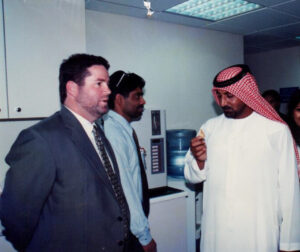
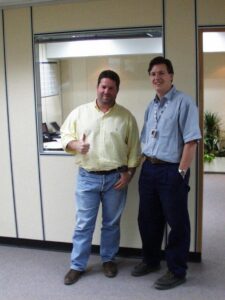
 When Glenayre purchased Quintron and BBL (circa’89), we were three independent paging companies, manufacturing similar, or competitive products, and overnight we became one.
At first, management focused on the tangible assets, warehouses and manufacturing facilities. We then focused on products and customers, but as the businesses came together, it became clear that the real value was not in the buildings, equipment, products, or even customers. Our greatest assets were our people, and they went home at night.
This realization came as we suddenly had three of almost everything: three sales organizations, three accounting teams, three manufacturing operations, three finance functions, three engineering groups, and three sets of people with years of knowledge and experience. The challenge was identifying the best people, bringing them together, and building a stronger organization.
Companies often say, “People are our most valuable asset.” The real test is whether the business can perform, make decisions, solve problems, and grow without the founder or senior leadership involved in every detail. If it cannot, you have built a dependency, not an organization.
 Leadership is not about making yourself indispensable. It is about building a team that can lead the business without you, not for you.
That requires responsibility, authority, and accountability. People need to know what they own, have the freedom to make decisions, and be measured on outcomes. Responsibility without authority creates frustration; authority without accountability creates risk; accountability without clarity creates confusion.
The strongest businesses are built around capable people who understand the strategy, know their responsibilities, and are accountable for results.
Good leaders also need people who will challenge assumptions and say when they disagree. If everyone around the table always agrees with the person at the head of it, you probably do not have a leadership team. You have an audience.
20 years later at Workz, we built our Senior Management Team around six of our top managers, supported by a shadow cabinet of our top lieutenants. That structure gave us depth, continuity, and a broader bench of people who could challenge decisions, develop into larger roles, and carry the organization forward.
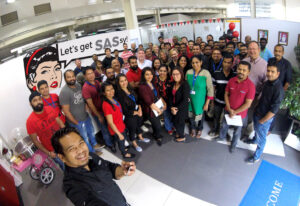 I remain forever indebted to those men and women. They gave the business their judgment, commitment, loyalty, and leadership, and much of what we accomplished was possible because of them.
A company that depends too heavily on its founders is fragile. One with capable management, institutional knowledge, strong systems, and disciplined governance is more resilient and ultimately more valuable.
The goal of leadership should not be to build a company that needs you. It should be to build one that learned from you, grew beyond you, and can continue succeeding without you.